

Key Dates
19 Dec -Judging
05 Jan 2026 -Winners Announced
-
categories
-
Architecture
-
Interior Design
-
Space Plus
Space Design
-
Product Design
-
Communication Design
-
Graphic Design - Identity and Branding - Property - Commercial
-
Graphic Design - Identity and Branding - Property - Lifestyle
-
Graphic Design - Identity and Branding - Property - Services
-
Advertising & Marketing
-
Service & System Design
Experience Design
-
Digital Innovation
-
Web & App Design
-
Better Future
Transformative Design
-
- quick start guide
- nominate
- past winners
- home
University of Technology Sydney
University of Technology Sydney / LEVO | Digital - Education
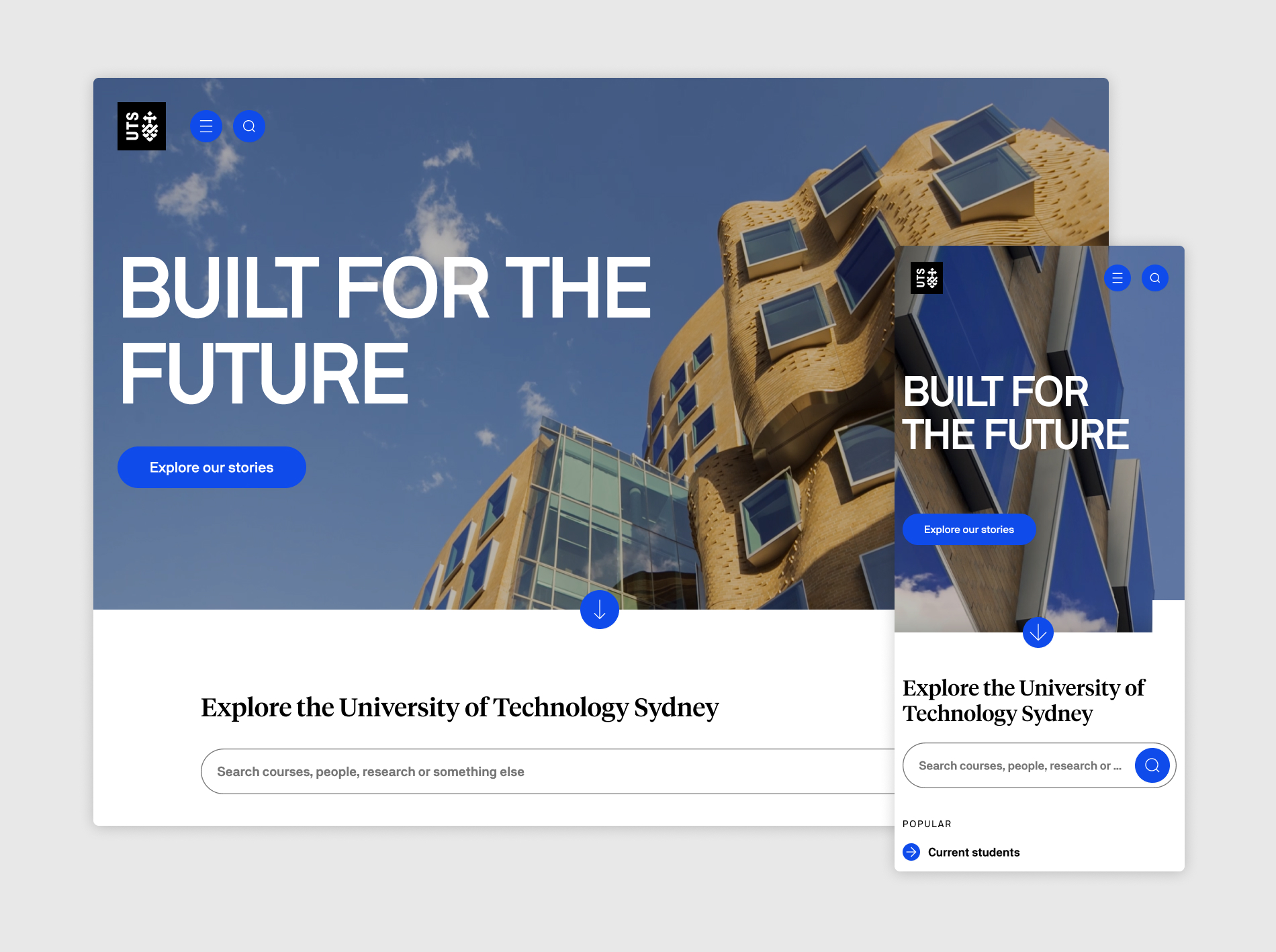
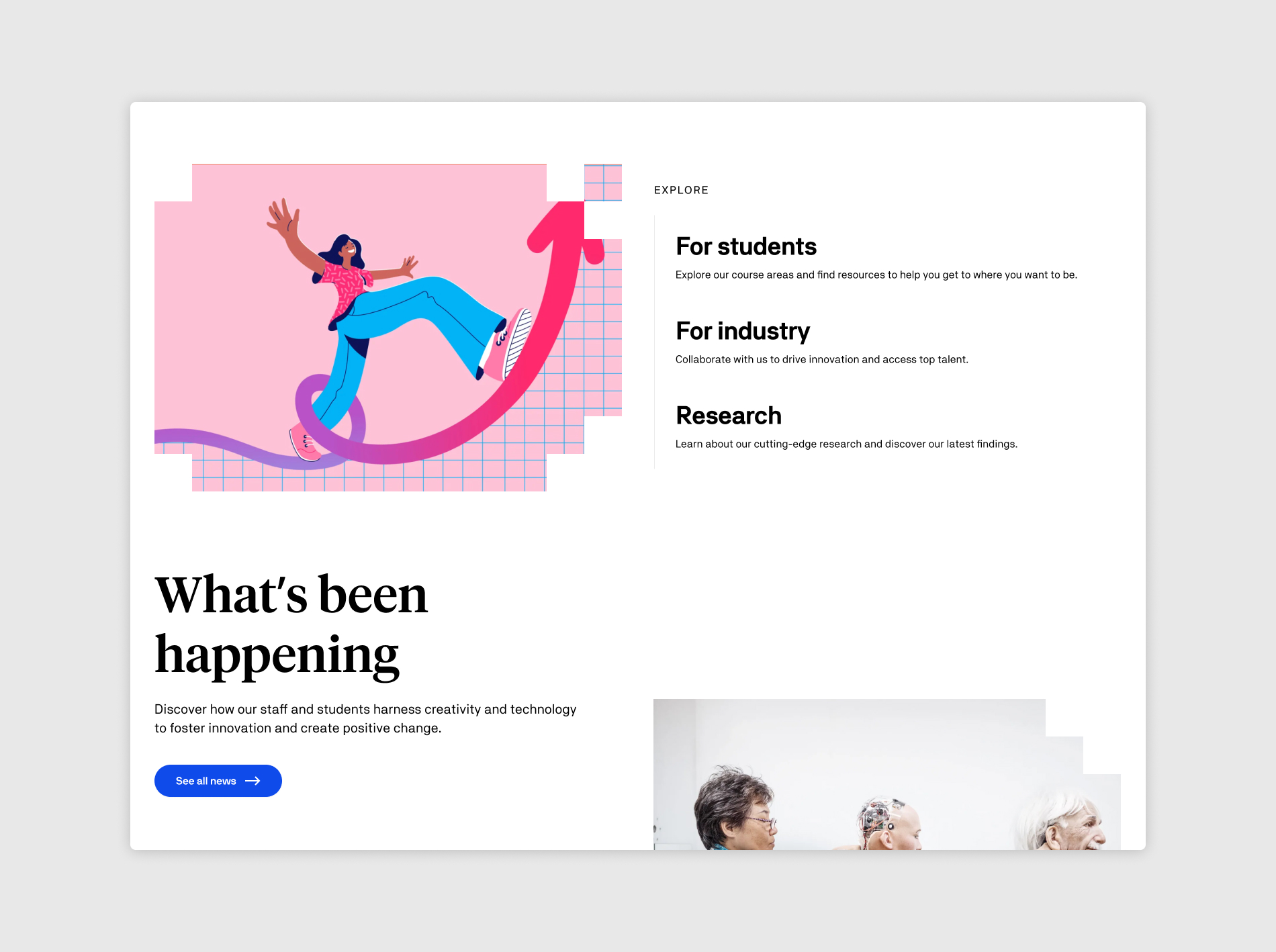
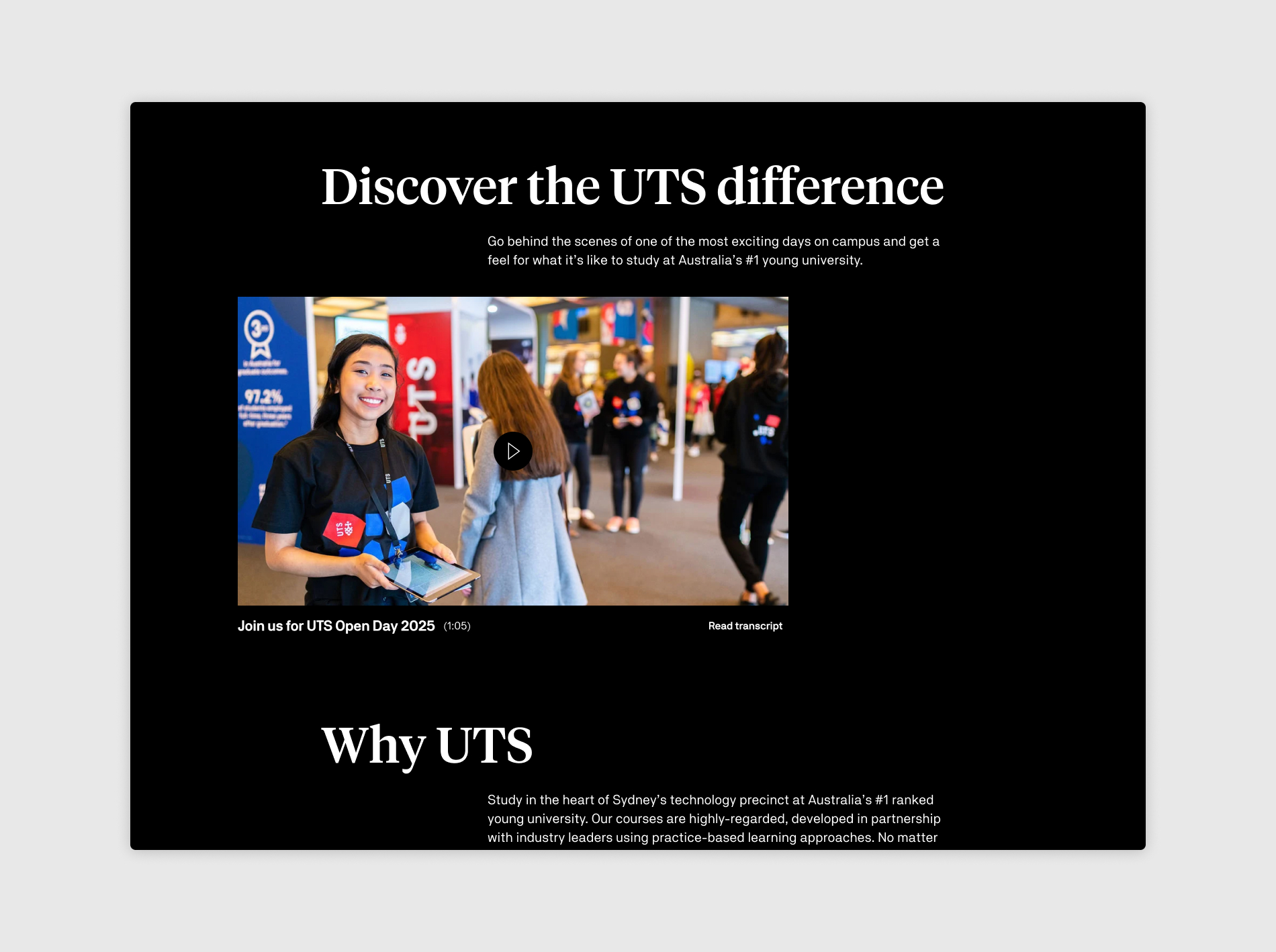
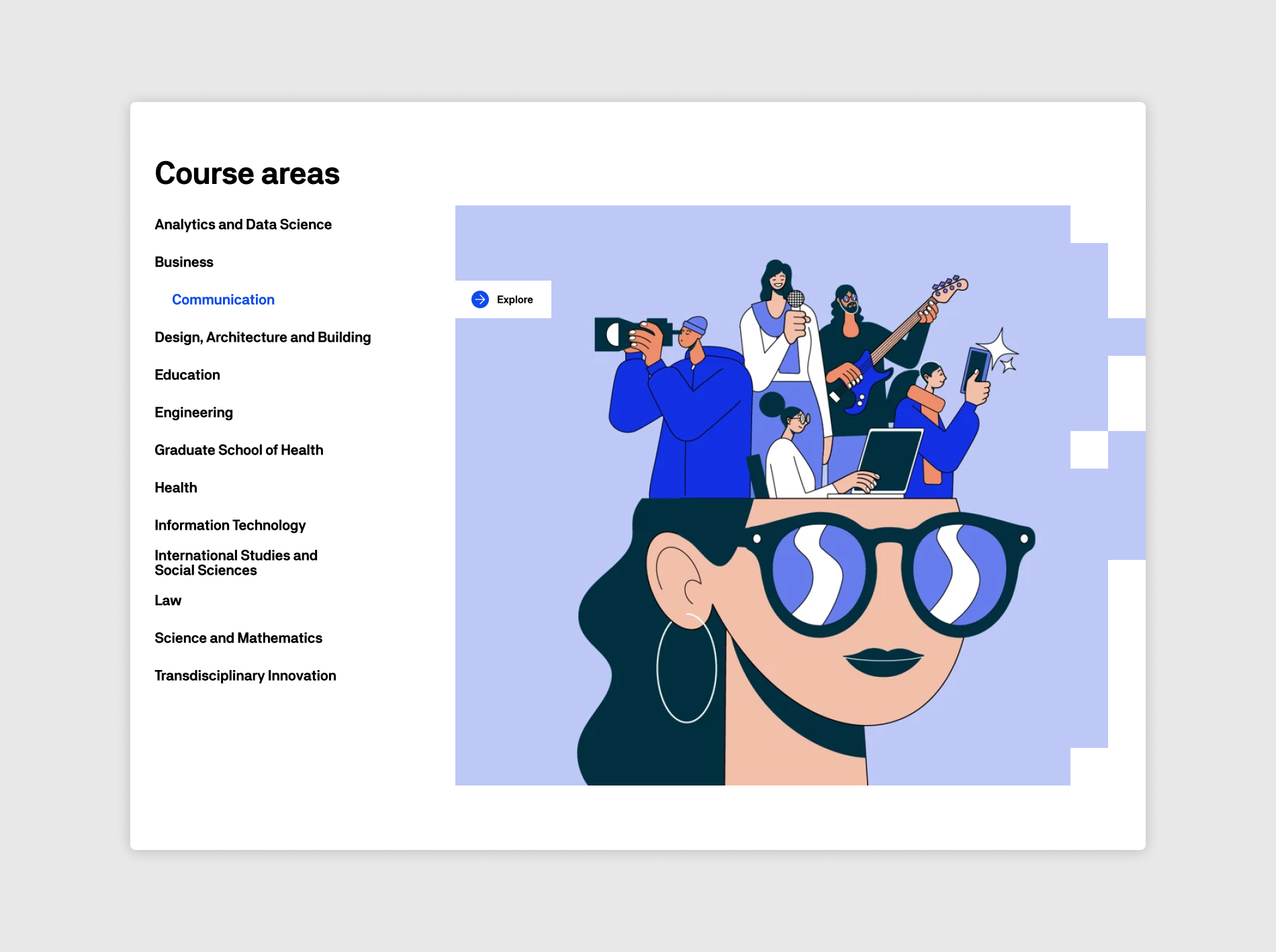
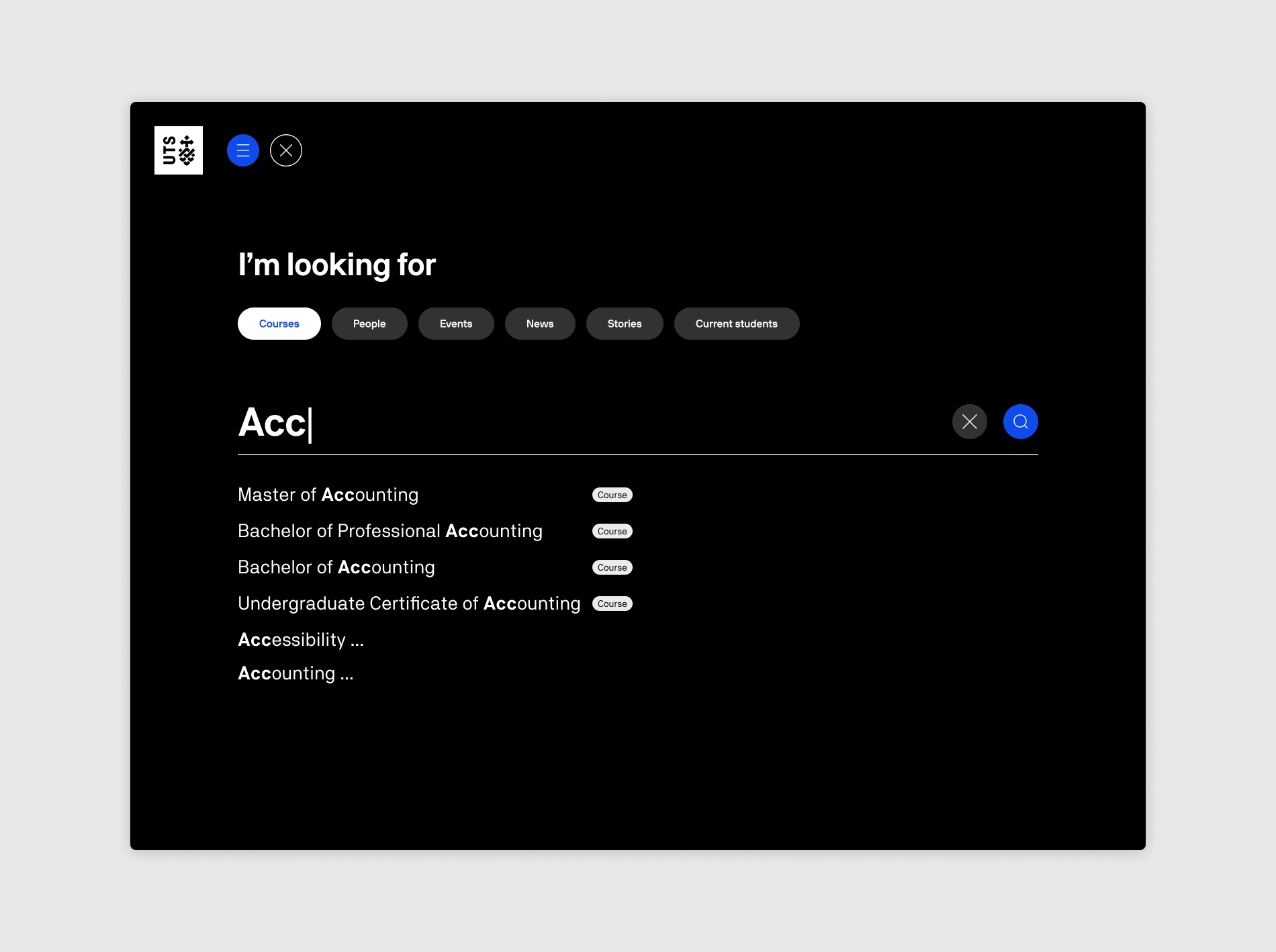
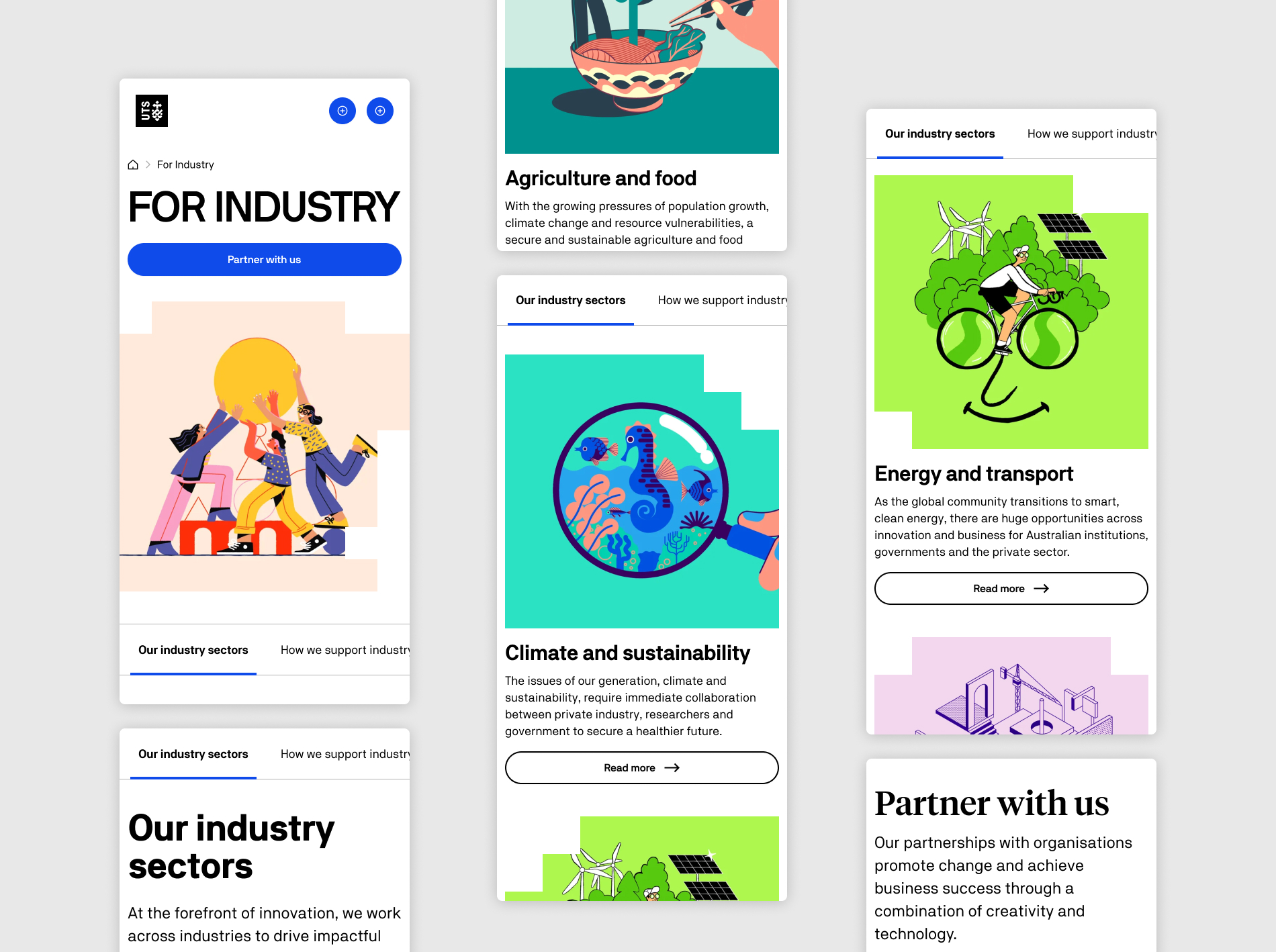
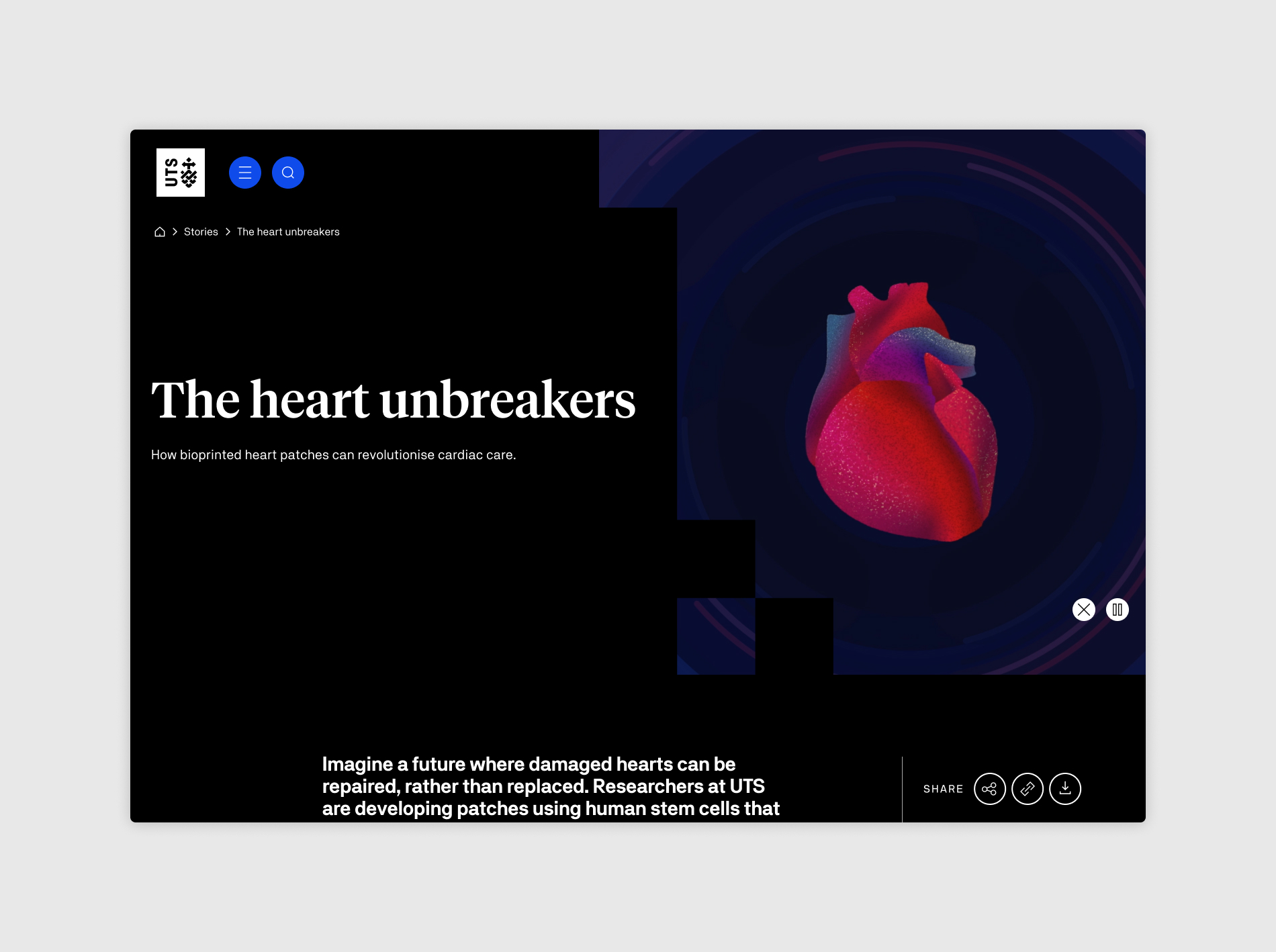
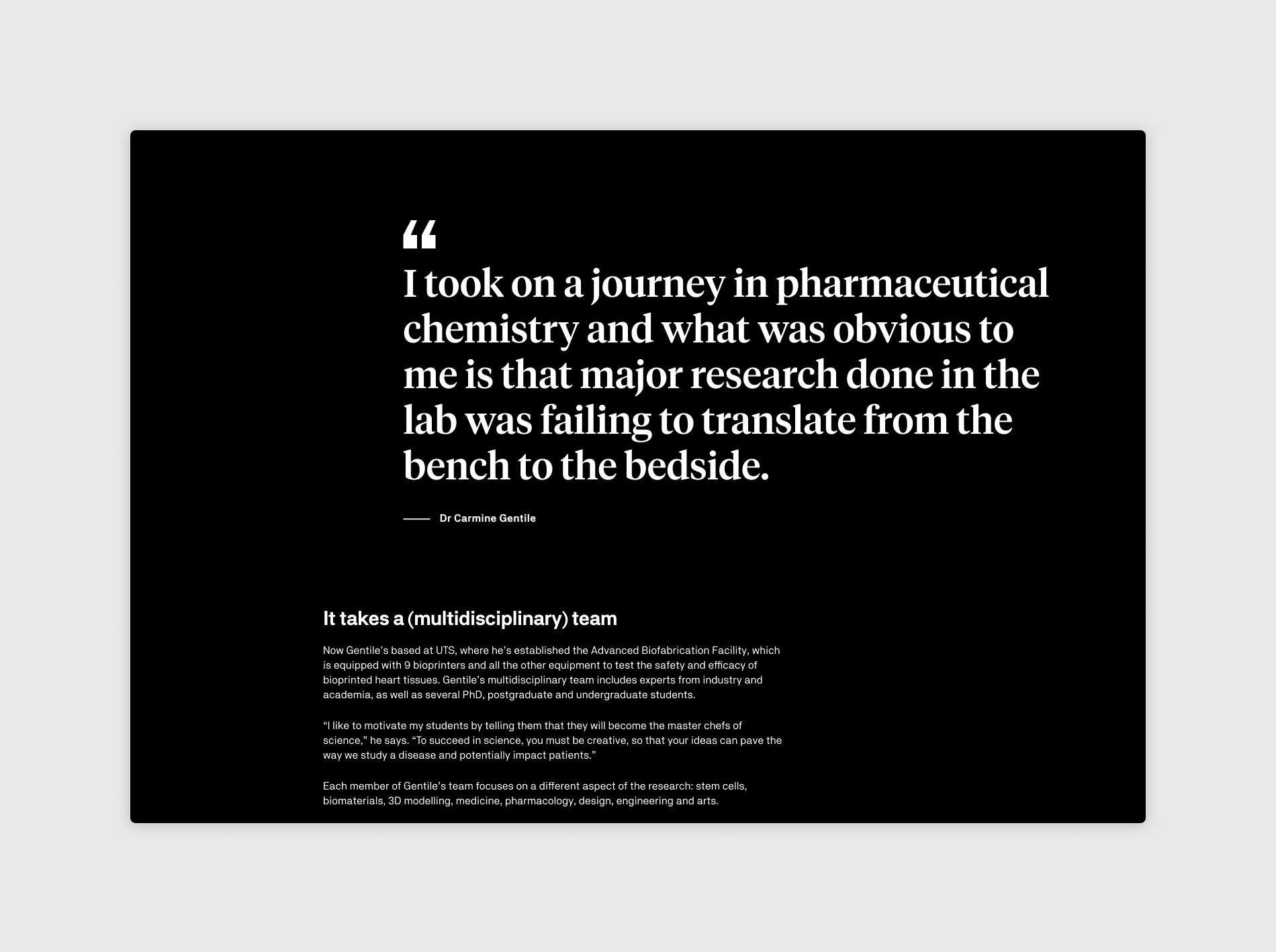
Image Credit : LEVO
Project Commissioner
University of Technology Sydney
Project Creator
Project Overview
As one of Australia's leading universities, UTS has long built its reputation on bold ideas, creative thinking, and world-class innovation. As part of its UTS 2027 Strategy and broader Digital Strategy, the university set out to transform its digital presence into a platform for engagement, storytelling, and connection—one that could better reflect UTS's identity, showcase its achievements, and support its reputation as a leading global institution.
To deliver this new, user-centric experience, the broader Digital Transformation program included a new experience and DXP, an overhaul of the course management system, implementation of a DAM, and establishment of a new content workflow and website governance structure.
To deliver on this new, user-centric experience the broader Digital Transformation stream included a new experience and DXP, overhaul of their course management system, implementation of a DAM and set-up of a new content workflow and website governance structure.
Team
LEVO - Alex Smith, Kevin Miller, Bryony Weiss, Rachael Maughan, Aimee McBride, Neena Karunakar, Nina McKenna, Aden Rolfe, Mark Dalton, Julia Ferrier, Josh Fernandez, Vinni Lazaro, Justin Mouris, Solaris De Abel, Paul Leatham, Martin Banks, John Deflets, John Ching, Angus McKay, Bala Duggimpudi, Jordan Pitt UTS - Tracy Chalk, John Bracks, Samuel Paris, Ben Chu, Millie So, Julie McAlonana, Tui Prichard, Nina Errey, Nick Evans, Camille Heaney, Olivia Bolton, Elizabeth Baulch, Nathan Roger, Kiran Mohan, Sudhakar Nampali, Senthil Kumar, Henryk Kobylanski
Project Brief
UTS is known for its transdisciplinary approach to learning, bringing together science, technology, business, and the arts to solve complex problems. The website needed to reflect that spirit of connection.
In an increasingly competitive higher education market, where digital-first engagement is often the deciding factor for student enrolment, the disconnect was clear: UTS's digital presence hadn't kept pace with the groundbreaking research and academic excellence happening behind the scenes.
UTS needed a digital presence that matched its ambition.
While many Australian universities market themselves on heritage and tenure—a world of traditions, sandstone buildings, and Ivy League ambitions—UTS isn't built to be like other universities and doesn't trade on heritage. It trades on what's next. A key question we used as a guiding principle throughout the project was "how do we zag?"
Strategically, we needed to move from a siloed directory of dead ends to a guided, connected, and inspiring experience for the university's student, business, research, and partnership audiences. This wasn't a cosmetic upgrade. It was a chance to reimagine what a digital campus could be: dynamic, intuitive, and distinctly UTS. A transformation that would not only modernise the experience but future-proof it and set it apart from other universities locally and internationally.
Project Need
UTS needed a flexible and feature-rich DXP that would empower the organisation to deliver on its 2027 Strategy and meet the needs of students, researchers, and staff. It also needed to scale smoothly and securely to meet the periodic traffic spikes that naturally occur at key times of the year, such as enrolment.
On top of this solid technical foundation, the visual language needed to be reimagined to better reflect the values of innovation, creativity, and impact while remaining sympathetic to how the brand appears across other non-digital touchpoints. The new experience needed to be bold, user-centric, accessible, and signal a meaningful leap in how UTS shows up online.
User Experience
Through the Discovery phase, we uncovered three core UX challenges that needed to be solved to deliver for a diverse audience: an intuitive search experience that guided users; a user-centric IA that organised content in a way that made sense to users, improving navigation and wayfinding; and contextually relevant content recommendations that encouraged exploration and discovery.
Key to delivering this was a program of iterative user research across UX and Design phases, engaging students, researchers, and staff to capture insights and drive a user-centric experience that met real-world needs.
The final execution incorporates bold, simple use of colour to create a feeling of clarity and confidence; a flexible grid system that embraces negative space to create balance and interest; and typography that brings personality and rhythm, ensuring written content is not only legible but also visually engaging. The use of colourful illustration and documentary-style photography helps convey the UTS brand, where creativity and authenticity are integral.
Project Marketing
LEVO designed and delivered a new student-focused digital experience that became the foundation for the university's refreshed brand and reputation campaign.
Launched in March, the platform not only redefined how UTS engages prospective students but also informed the creative and campaign activity that followed. After being live for eight months, we're already seeing strong results across the board. New visitor numbers have increased by 24%, showing we're reaching audiences we hadn't been able to tap into before. Engagement metrics are up by 20%, meaning the traffic we're attracting is not only higher in volume but more meaningful in quality. Overall site traffic has grown by more than 17% year on year, and there's been a 151% uplift in SEO search visibility. Within the first four weeks of launch, UTS moved up two places in Google's organic search rankings—the first positive movement in over two years, which is significant given that 60% of total traffic comes from organic channels.
Project Privacy
UTS has a comprehensive policy framework that covers all aspects of the university, including privacy. As part of this project, we adhered to the existing Privacy Policy as it pertains to the collection of personal information; storage, security, and access; use and disclosure; retention; individual rights; and complaints and internal reviews. The policy clearly defines the roles and responsibilities of UTS as the Policy Owner, as well as key definitions. For more information, please visit the UTS Privacy Policy page - https://www.uts.edu.au/about/leadership-governance/policies/a-z/privacy-policy
Digital - Education
EdTech focuses on how education is changing through technology, changing the way we learn and process knowledge. What will stand out here is those that enhance the learning experience and make a lasting impression.
More Details