

Key Dates
19 Dec -Judging
05 Jan 2026 -Winners Announced
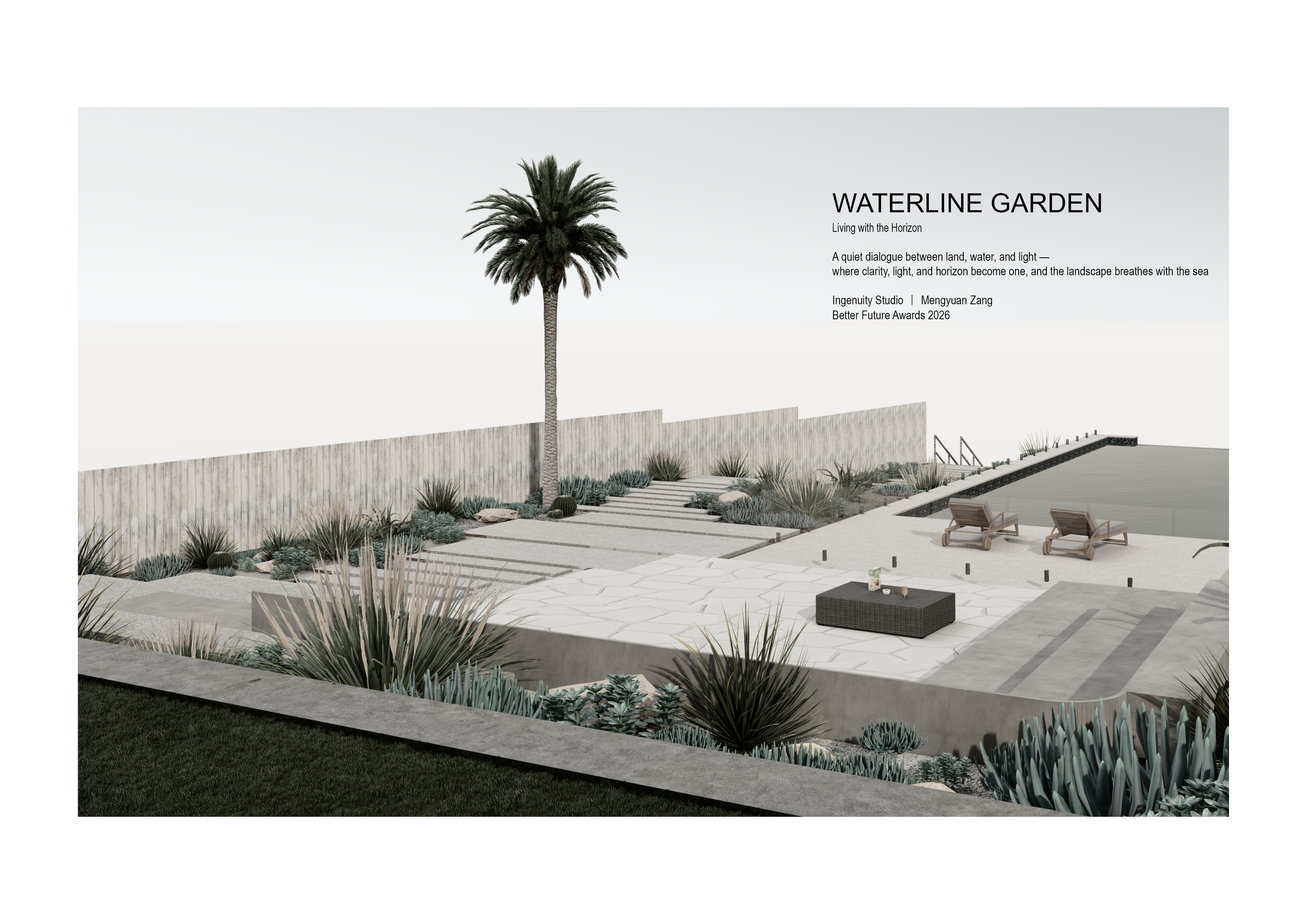
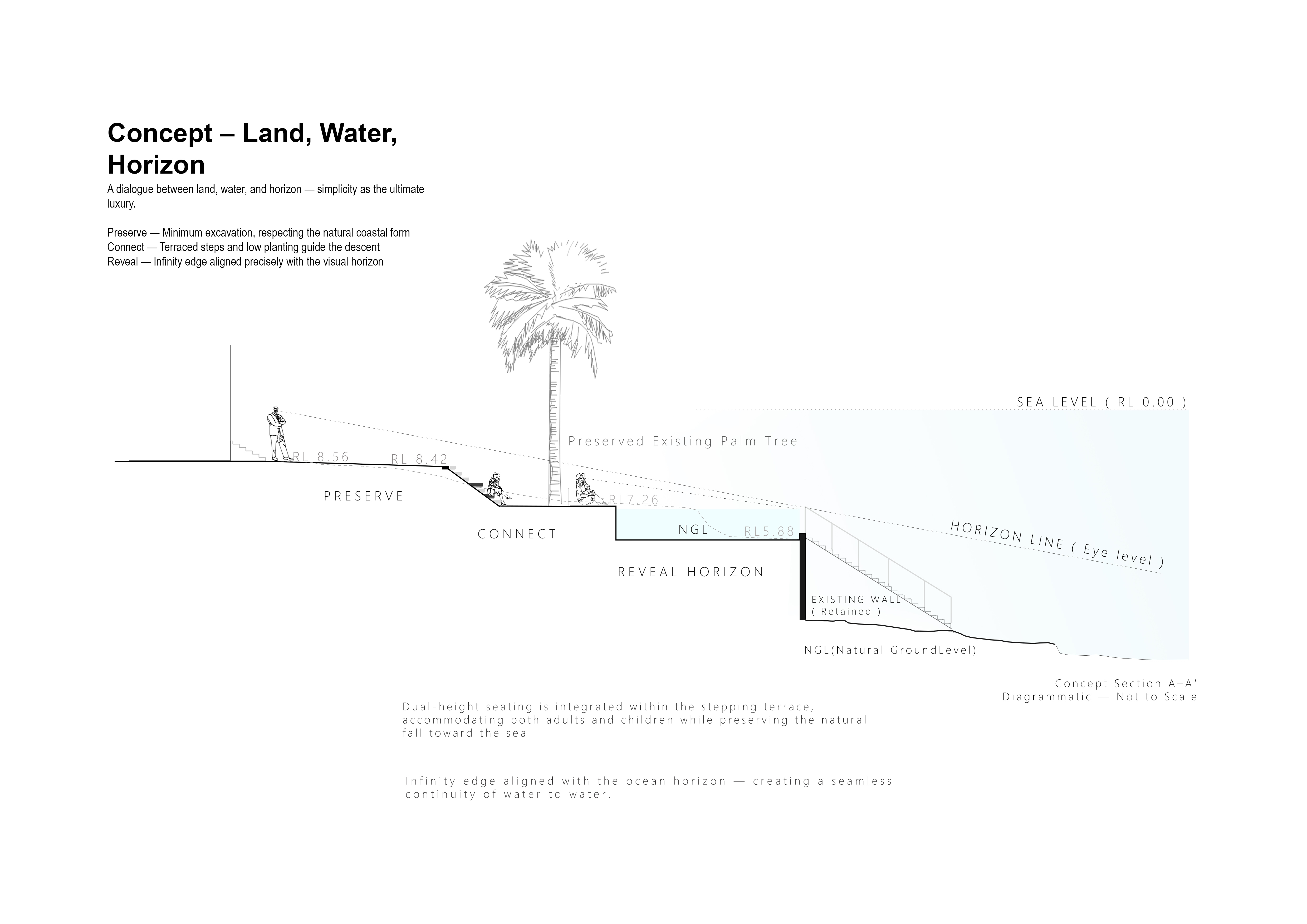
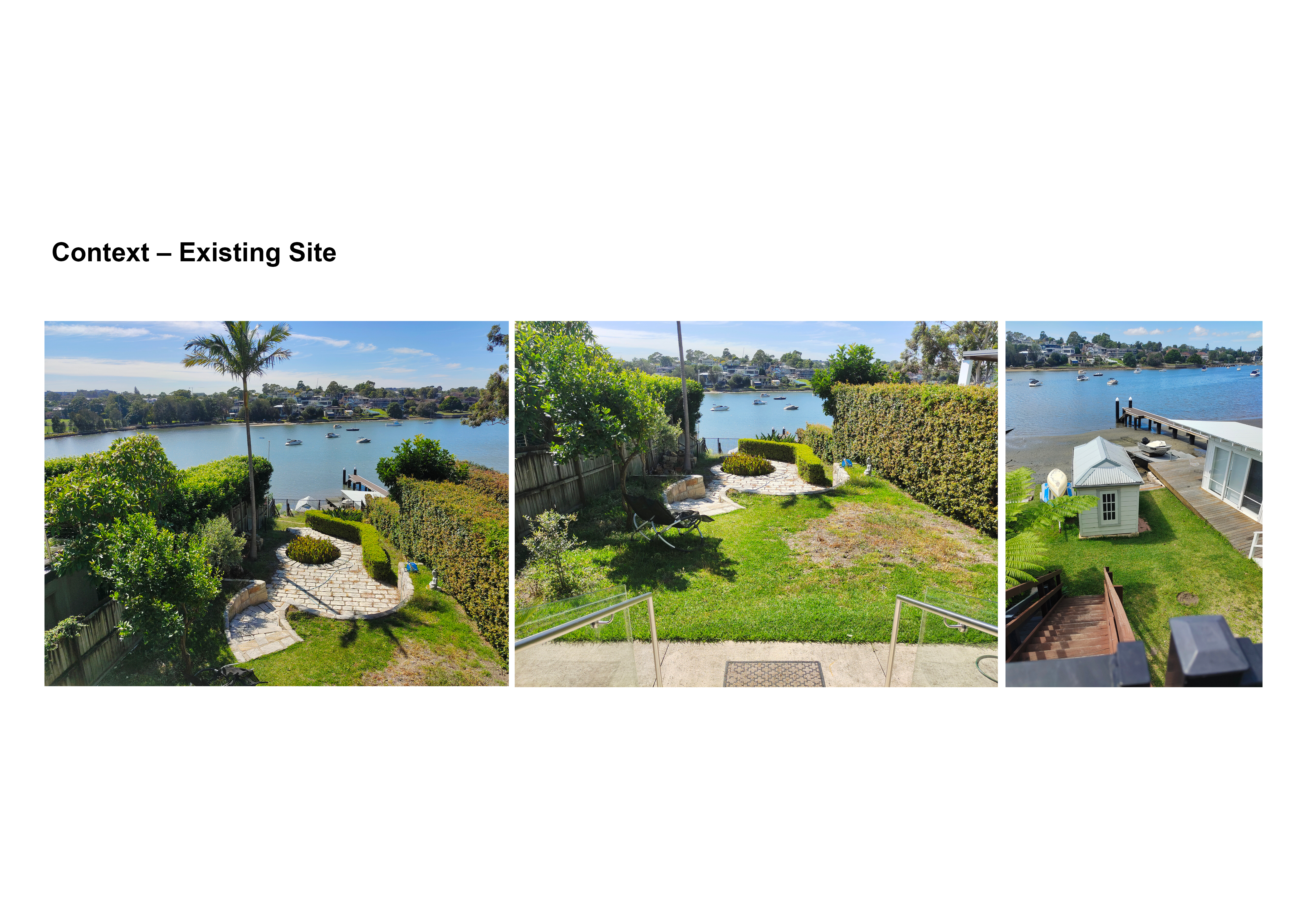
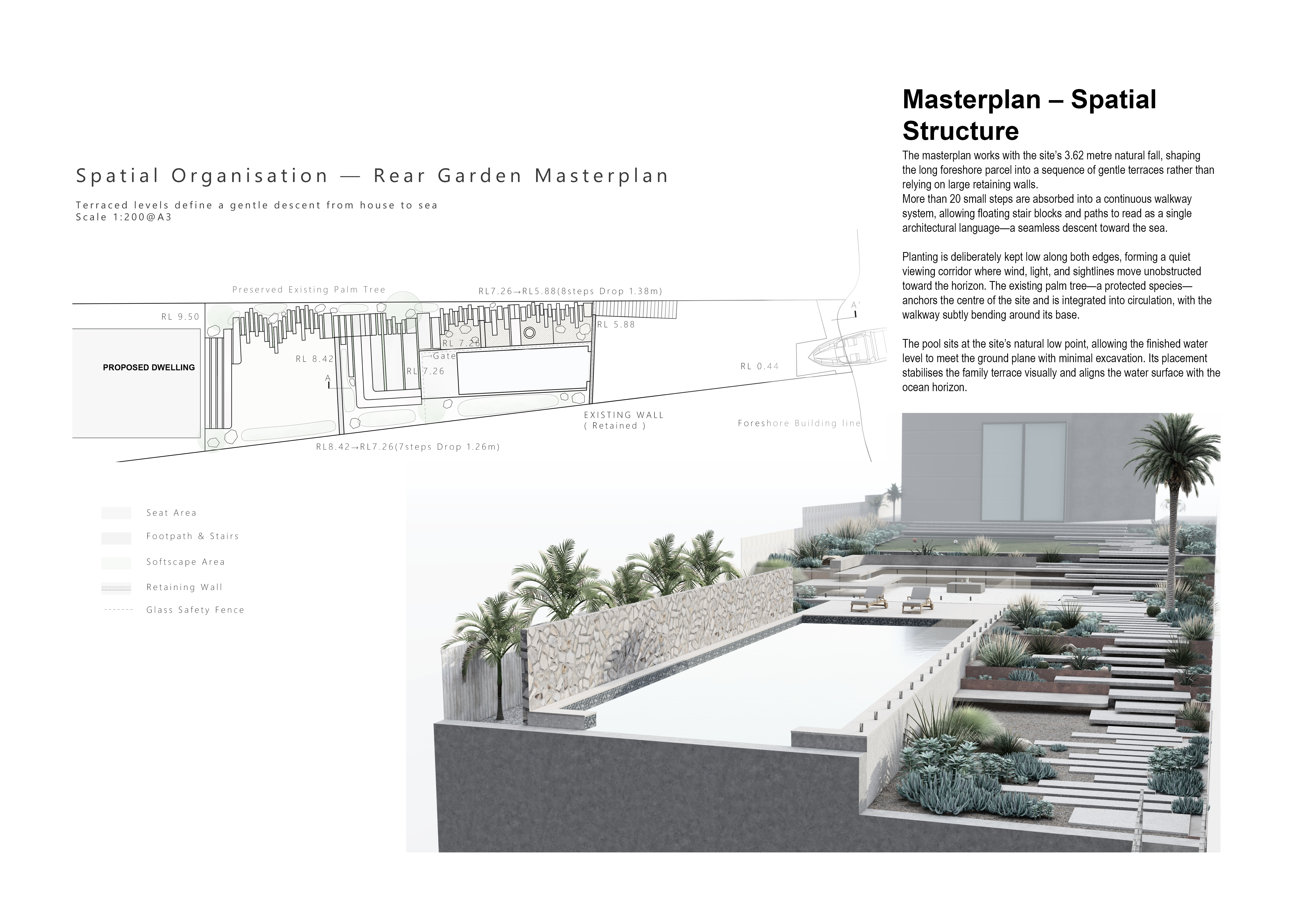
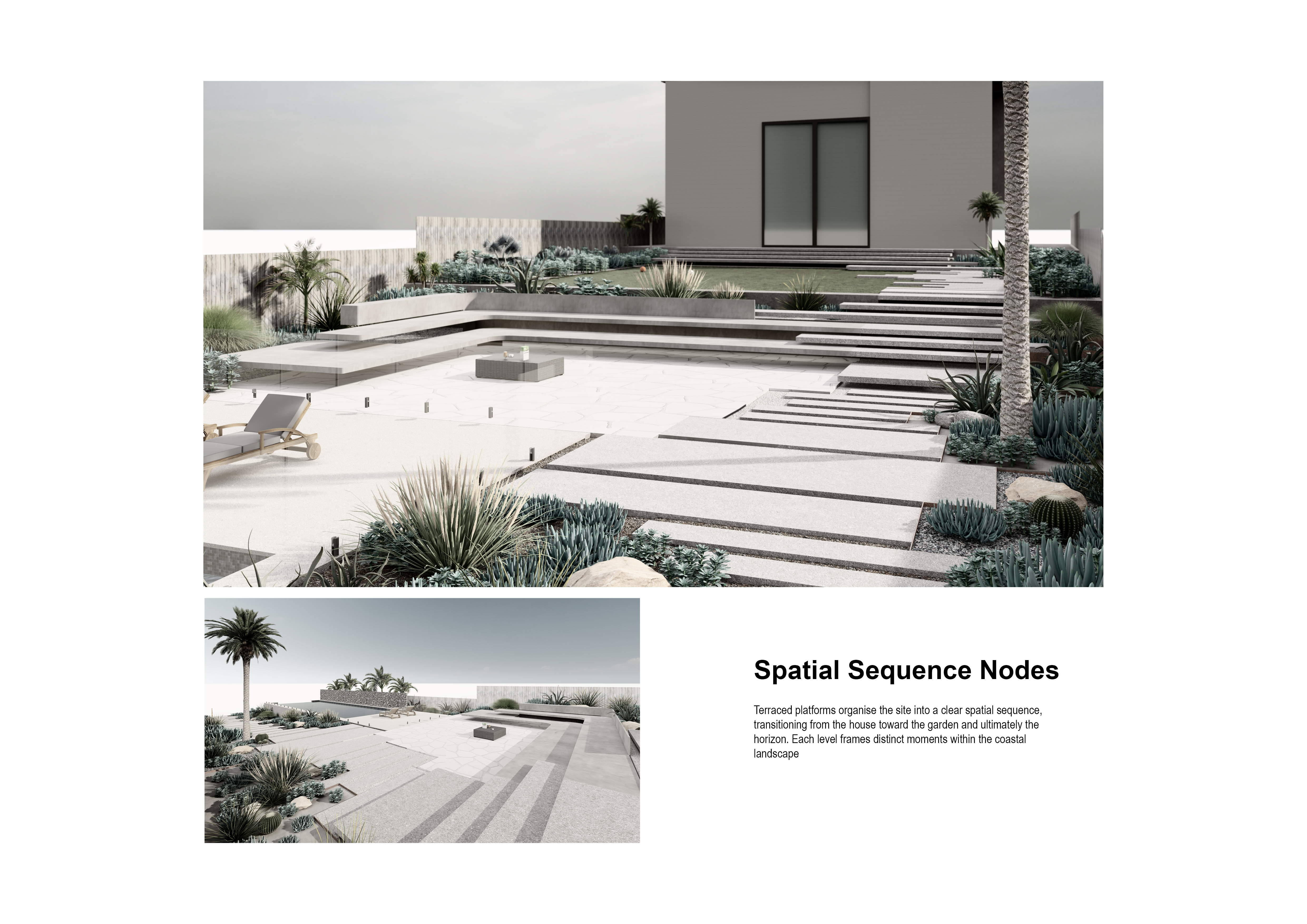
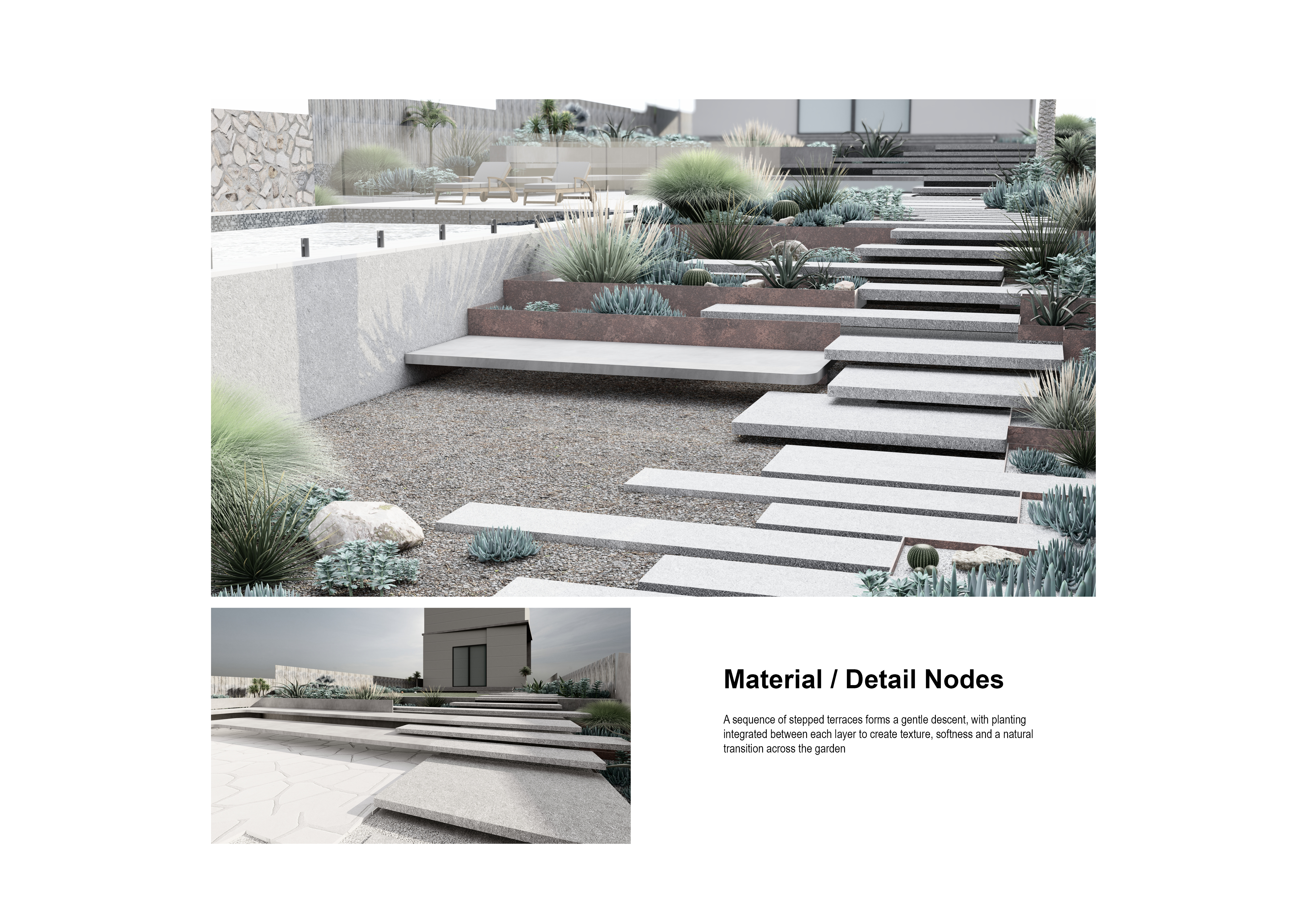
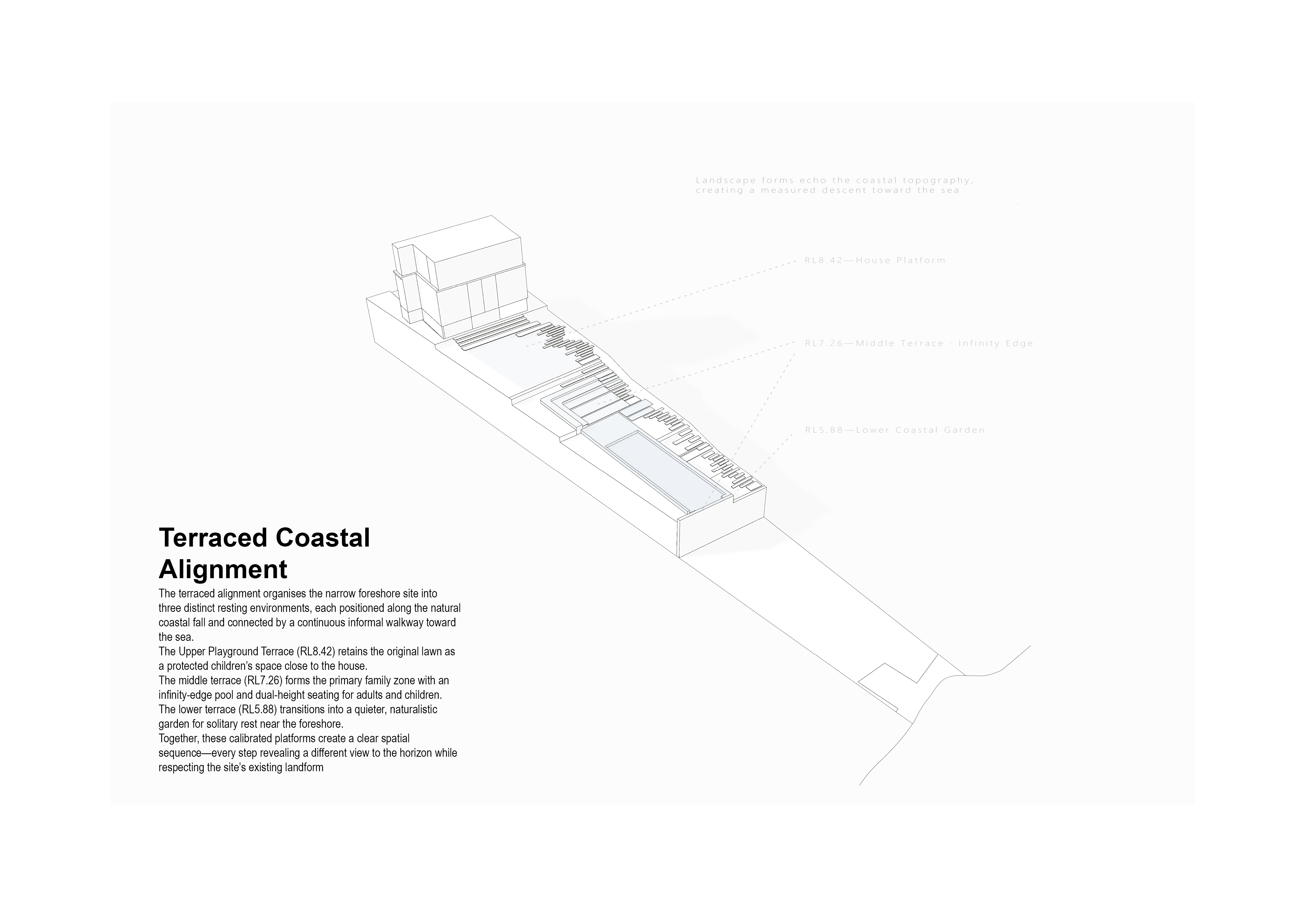
Image Credit : Design & Visualisation: Mengyuan Zang, Ingenuity Studio
Project Commissioner
Project Creator
Project Overview
This project responds to a steep foreshore site where a significant level change separates the dwelling from the harbour edge. Rather than minimising the terrain, the design transforms the descent into a sequence of calibrated terraces that guide movement, frame views and maintain a continuous relationship between house, landscape and water. Working within coastal controls, the intervention redefines topographic challenge as an environmental asset—creating a garden where daily movement becomes an immersive experience of land, horizon and sea
Team
Ingenuity Studio was engaged for the full design scope, including concept design, site analysis, level strategy, masterplan development and the preparation of landscape documentation for both DA and CC submission. Our services concluded at the completion of the approved design package. Construction works, including the new dwelling and landscape implementation, were managed independently by the client and their appointed builder.
Project Brief
The brief called for an environmental intervention capable of resolving a narrow, steep foreshore site with a level change of approximately 3.6 metres, constrained by coastal controls, while maintaining a strong visual and experiential connection between dwelling, landscape and water. The challenge was to work within strict regulatory and physical limits without compromising the integrity of the site’s natural form.
The response was to work directly with the existing landform, organising the site into a terraced spatial sequence where each level performs a distinct function while contributing to a unified descent towards the water. This vertical transition—negotiated daily—was reframed as an environmental asset rather than a technical constraint.
Circulation paths, planted thresholds and open platforms choreograph movement from house to sea, moderating gradient, slowing passage and repeatedly reorienting the body toward the horizon. The swimming pool is embedded within a natural dip in the terrain, allowing it to sit low within the landscape and visually merge with the harbour beyond, so that water is continually re-encountered throughout the journey rather than only at the site’s edge.
By lowering built massing along both sides, the intervention quietens the landscape, strengthens the central view corridor and allows the site’s environmental structure to remain visually and spatially legible. In doing so, the project demonstrates how significant topographic change can be transformed into a coherent spatial and experiential framework.
Project Innovation/Need
The project proposes an alternative approach to coastal environmental design, where a 3.62 metre topographic change is treated not as an obstacle to be engineered away, but as a spatial and experiential generator. Rather than resolving this height difference through dominant retaining structures, the design absorbs the change into a continuous linear circulation system that traverses the site from house to sea. Steps, landings and paths are integrated into a single spatial language, allowing vertical movement to unfold gradually and intuitively as part of everyday use.
Innovation lies in the precise calibration of level change as a continuous environmental system. Instead of concentrating intervention at a single threshold, movement, programme and pause are distributed across a terraced sequence aligned with existing contours. The height difference is broken down into incremental transitions through walkways, planted thresholds and open platforms, enabling the landscape to guide behaviour and perception while remaining visually light and legible.
The placement of the swimming pool exemplifies this approach. By locating it within a natural dip in the terrain, the pool becomes part of the landform rather than an imposed object, reducing excavation while preserving visual continuity to the harbour. Water is therefore experienced not as a destination, but as an environmental condition encountered repeatedly throughout movement, reinforcing the site’s relationship with the sea.
This strategy demonstrates how coastal landscapes can remain adaptable, spatially coherent and experientially rich while operating within strict regulatory frameworks—offering a replicable model for low-impact intervention on constrained foreshore sites.
Design Challenge
The primary design challenge was resolving a significant level change across a narrow foreshore site while maintaining comfort, environmental sensitivity and daily usability. A vertical difference of approximately 3.62 metres needed to be negotiated between the house and the harbour edge, requiring a solution that supported frequent movement without fatigue or visual disruption.
Positioning a swimming pool on a bedrock foreshore site presented a second challenge. Conventional approaches often elevate pools to reduce excavation, but this would have obstructed the ocean view corridor and visually separated the landscape from the horizon. The design needed to balance construction feasibility, environmental impact and uninterrupted visual connection to the sea.
The site’s elongated form introduced further complexity. Movement toward the water risked becoming monotonous or physically demanding, requiring careful sequencing of circulation, rest points and outlooks to ensure the journey felt gradual, varied and inviting rather than linear or forced.
An existing palm tree with a protected root zone added another environmental constraint. Rather than treating it as an obstacle, the tree was retained and embedded within the circulation logic, influencing terrace geometry, planting strategy and spatial rhythm. It became a key environmental anchor, shaping the character of the landscape while reinforcing ecological responsibility.
Together, topography, foreshore controls, construction limits and environmental protection demanded a highly integrated design approach where experience, regulation and landform were resolved simultaneously rather than independently.
Sustainability
The project adopts a sustainability strategy grounded in minimal disturbance, long-term resilience and everyday usability, responding directly to the site’s environmental constraints rather than overriding them.
Instead of regrading the steep foreshore terrain or introducing large retaining structures, the 3.62metre level change is absorbed through a terraced sequence aligned with existing landform. This approach significantly reduces excavation and material input while maintaining natural drainage patterns and visual continuity across the site. Where excavation was required, material was reused on site to balance cut and fill, minimising waste and transport impacts.
The swimming pool is positioned within a natural low point in the terrain, allowing it to sit flush with surrounding ground levels. This strategy limits bedrock excavation, reduces visual impact and avoids the need for elevated structures that would disrupt both environmental character and view corridors.
A high proportion of soft landscape was retained in response to foreshore planning controls, supporting permeability, microclimate moderation and long-term adaptability. Existing vegetation, including a mature palm tree, was preserved and integrated into the spatial structure, reinforcing ecological continuity and shaping circulation. Planting selection prioritises coastal resilience, reducing long-term maintenance and replacement demands in a high-wind, salt-exposed environment.
Beyond environmental performance, the project supports experiential sustainability by transforming a steep daily journey from house to sea into a comfortable, legible and rewarding sequence. Gradual transitions, resting points and continuous visual engagement with the harbour ensure the landscape remains usable and enjoyable over time, reinforcing sustainable patterns of everyday use.
Environmental Design
This award celebrates innovative and creative design for environmental projects. Consideration given to materials, finishes, sustainablility and environmental impact.
More Details